
What Is the Purpose of MDM? Why Master Data Management Matters
Discover the purpose of MDM and how Master Data Management helps businesses improve data quality, create a single source of truth, strengthen governance, and support better decisions.
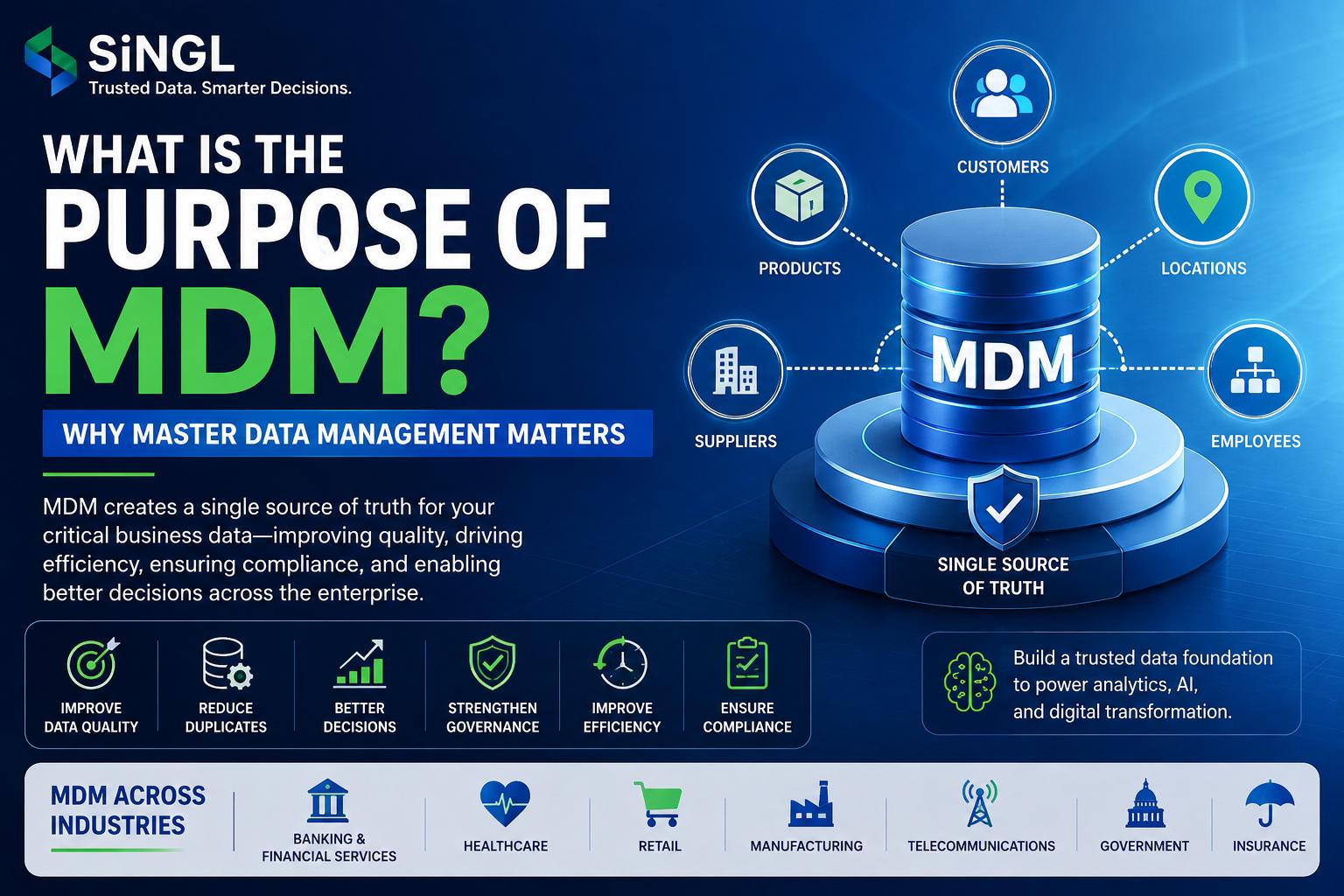
Why Master Data Management Is Essential for Modern Businesses
Businesses generate and use data every day.
Customer details, product information, supplier records, and employee data are shared across different teams and systems to support daily operations. As organizations grow, managing this information becomes more challenging.
Different departments may store the same data in different ways, making it difficult to maintain consistency. Over time, this can lead to duplicate records, reporting errors, and inefficient business processes.
The purpose of Master Data Management (MDM) is to solve these challenges by creating a single, trusted view of an organization's most important business data. Master Data Management Solutions can help organizations bring critical information together, improve data quality, and establish consistent processes for managing it.
By ensuring everyone works with accurate and consistent information, MDM helps businesses make better decisions, improve efficiency, and support long-term growth.
Why Is Master Data Management Important?
Data is one of an organization's most valuable assets.
However, data only becomes useful when it is accurate, complete, and consistent across every system. As businesses add more applications, databases, cloud platforms, and digital channels, maintaining this consistency becomes increasingly difficult.
Without a structured approach to managing data, businesses often face problems such as:
Duplicate customer records
Inconsistent product information
Different reports showing different results
Poor customer experiences
Compliance challenges
Delays in business processes
MDM helps address these issues by creating one trusted version of business data that can be shared across the organization.
The Main Purpose of MDM
Although every organization has different business goals, the purpose of MDM remains the same—to ensure that critical business data is accurate, reliable, and accessible.
Here are some of the key objectives of Master Data Management.
Create a Single Source of Truth
One of the primary purposes of MDM is to create a single source of truth.
Instead of maintaining multiple versions of customer, supplier, or product data, organizations create one trusted master record that every department can use.
This improves consistency and reduces confusion across business operations.
Improve Data Quality
Poor-quality data affects every part of a business.
MDM helps improve data quality by identifying duplicate records, correcting errors, standardizing information, and maintaining accurate master data over time.
Better data quality leads to better business outcomes and gives teams greater confidence in the information they use.
Support Better Decision-Making
Business decisions depend on reliable information.
When executives and teams have access to trusted data, they can make faster and more informed decisions based on accurate reports and analytics.
MDM reduces uncertainty by ensuring everyone works with the same information.
Deliver Better Customer Experiences
Customers expect organizations to understand their needs and provide consistent service across every interaction.
MDM helps create a complete customer view by combining information from multiple systems.
This allows sales, marketing, and customer support teams to deliver more personalized and efficient experiences.
Strengthen Data Governance
Managing enterprise data requires clear ownership and accountability.
MDM supports data governance by defining who owns the data, who can update it, and how quality standards are maintained.
This helps organizations maintain trusted data over the long term.
Improve Operational Efficiency
When employees spend less time searching for information or correcting duplicate records, they can focus on higher-value work.
MDM streamlines business processes by reducing manual effort and improving collaboration across departments.
Support Regulatory Compliance
Many industries must comply with strict regulations regarding customer and business data.
MDM helps organizations maintain accurate records, improve audit readiness, and support compliance with regulatory requirements.
For organizations in regulated sectors, a structured approach to master data can also make it easier to demonstrate consistent data management practices.
Build a Strong Foundation for AI
Artificial Intelligence depends on high-quality data.
If data is incomplete or inconsistent, AI models may generate inaccurate insights.
MDM provides trusted master data that improves the quality of information used for analytics, machine learning, and AI initiatives.
As organizations continue investing in AI, the purpose of MDM has become even more important.
How MDM Supports Different Business Functions
Master data is not limited to one department. Customer, product, supplier, location, and other critical records can affect multiple business functions simultaneously.
For example, sales teams need accurate customer information, finance teams depend on consistent records for reporting, while operations teams may rely on standardized product and supplier data.
By creating consistent master records, MDM helps different departments work from the same information instead of maintaining disconnected versions of business data.
Who Benefits from MDM?
Master Data Management provides value across the entire organization.
Some of the teams that benefit include:
Sales teams with complete customer information
Marketing teams running more targeted campaigns
Finance teams using accurate reports
Operations teams improving efficiency
IT teams managing data across multiple systems
Executive leaders making strategic business decisions
Because every department relies on trusted data, MDM becomes a shared business capability rather than just an IT project.
Industries That Use MDM
Master Data Management is used across many industries, including:
Banking and Financial Services
Healthcare
Retail
Manufacturing
Telecommunications
Government
Insurance
While the use cases vary, the purpose remains the same—creating trusted data that supports better business outcomes.
For example, Healthcare MDM can help organizations manage critical information such as patients, providers, locations, and other healthcare-related records consistently across connected systems. The exact implementation depends on the organization's data environment, operational requirements, and governance practices.
Similarly, Financial Services MDM can support organizations that need consistent customer, account, product, branch, and other business information across multiple applications. Reliable master data can help financial organizations improve reporting, operational processes, and data governance.
MDM for Organizations With Complex Data Environments
The need for MDM often becomes more visible when an organization operates across multiple applications, business units, or locations.
For example, a growing organization may have separate systems for customer relationship management, finance, supply chain, e-commerce, and analytics. Without a consistent master data strategy, the same customer or product may appear differently across these systems.
Organizations operating in major business hubs may also have complex technology environments and distributed teams. Businesses exploring Master Data Management in New York, for instance, may need to coordinate information across multiple operational systems while maintaining consistent enterprise-wide data standards.
Similarly, organizations considering Master Data Management in Chicago may use MDM to establish consistent customer, product, supplier, or location information across departments and connected applications.
For businesses evaluating Master Data Management in Dallas, the same principle applies: the technology should support the organization's specific data landscape, governance requirements, integration needs, and long-term business objectives.
These regional examples should be viewed as business-context considerations rather than separate MDM methodologies. The fundamental objective remains the same: creating trusted and consistent master data.
Why MDM Matters for Modern Data Strategies
Modern organizations increasingly depend on analytics, cloud applications, automation, and artificial intelligence.
However, these technologies are only as reliable as the data behind them. When critical business information contains duplicates, inconsistencies, or outdated records, downstream analytics and applications can be affected.
MDM provides a structured foundation for managing this information. By improving data quality and consistency before data is used across business processes, organizations can build stronger foundations for analytics, AI, reporting, and digital transformation.