Is SAP MDG in Demand? Career Opportunities, Business Benefits, and Future Scope in 2026
Explore whether SAP MDG is in demand in 2026, its career opportunities, industry applications, essential skills, and future role in enterprise data governance
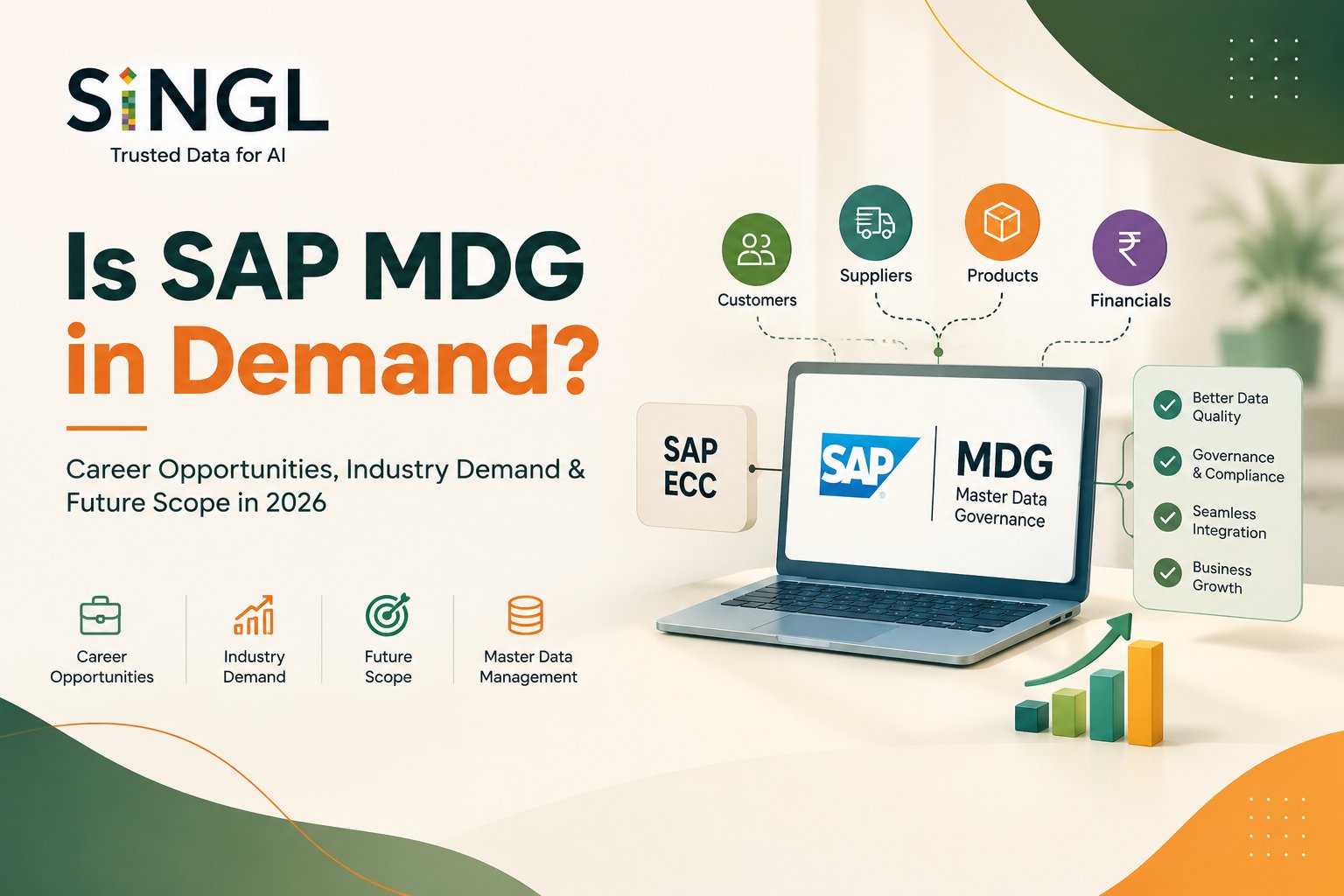
SAP Master Data Governance (SAP MDG) remains relevant in 2026 as enterprises modernize their ERP systems, improve data quality, and prepare their information for analytics and artificial intelligence. Organizations operating multiple SAP and non-SAP applications need consistent customer, supplier, product, and financial data to support reliable business operations.
But is SAP MDG in demand, and what does that mean for businesses and professionals?
SAP continues to develop Master Data Governance for SAP S/4HANA, including central governance, consolidation, data quality management, and cloud-ready capabilities. These developments, together with ongoing SAP modernization projects, create practical reasons for organizations to invest in MDG expertise. However, demand for individual professionals varies by industry, location, experience, and project requirements.
This guide explores why SAP MDG remains relevant, the skills associated with MDG careers, its applications across industries, and the role of Master Data Management in modern enterprise technology.
What Is SAP MDG?
SAP Master Data Governance is a solution designed to help organizations create, maintain, validate, and distribute consistent master data across their business systems.
Master data includes essential business information such as customer profiles, supplier records, materials, products, and financial reference data. When different departments maintain conflicting versions of these records, organizations can experience duplicate information, reporting inconsistencies, and operational delays.
SAP MDG addresses these problems through structured governance processes. Its capabilities include approval workflows, business-rule validation, data consolidation, duplicate detection, and distribution of approved records to connected systems.
For example, when a business creates a new supplier, SAP MDG can route the record through validation and approval before making it available to procurement and finance applications. This helps different departments work with consistent information.
Is SAP MDG Still in Demand in 2026?
SAP MDG continues to have important enterprise applications in 2026. Its relevance is supported by SAP's ongoing product development, the need for governed data across complex technology environments, and ERP modernization initiatives.
SAP provides MDG capabilities across on-premises and cloud environments. Its recent documentation describes both classic and cloud-ready modes on SAP S/4HANA, demonstrating continued investment in the technology.
There are several reasons organizations continue to need these capabilities.
1. SAP S/4HANA Migration Creates Data Governance Requirements
Many organizations are transitioning from SAP ECC to SAP S/4HANA. Before migrating, they need to identify duplicate records, resolve inconsistent data, define ownership, and establish reliable governance processes.
SAP has committed to mainstream maintenance for applicable SAP Business Suite 7 core applications through the end of 2027, with optional extended maintenance through the end of 2030. These timelines provide an important planning context for organizations managing ERP transitions.
SAP MDG can support migration preparation by consolidating master data, applying validation rules, and establishing consistent processes for creating and updating records.
2. Enterprises Need Consistent Data Across Multiple Systems
Large organizations frequently operate ERP platforms, CRM applications, procurement software, cloud databases, and industry-specific systems.
A customer may appear under different identifiers in sales, finance, and support applications. Without appropriate governance, these differences can create reporting errors and fragmented customer information.
SAP MDG helps establish controlled processes for managing master data across connected applications. Businesses can also implement broader Master Data Management Solutions to integrate information from SAP and non-SAP environments.
3. Data Quality Is Important for Analytics and AI
AI and analytics systems depend on the accuracy and consistency of their underlying information. Duplicate customers, incomplete supplier records, and inconsistent product classifications can affect the reliability of business insights.
SAP MDG supports data quality rules, monitoring, consolidation, and correction processes. Its governance capabilities help organizations maintain dependable master data that can be used in downstream analytics and AI applications.
MDG does not automatically make every AI system reliable, but it can strengthen an important part of the enterprise data foundation.
4. Regulatory and Operational Requirements Increase the Need for Governance
Organizations in regulated industries often need clear data ownership, controlled changes, and records of who approved important information.
Master data governance provides structured workflows and traceability that can support these requirements. The specific compliance benefits depend on the organization's industry, regulatory obligations, system configuration, and internal controls.
Which Industries Use SAP MDG?
SAP MDG is relevant across industries that manage large volumes of business-critical data. Its implementation requirements depend on the types of records an organization maintains, the complexity of its systems, and its governance objectives.
Financial Services
Banks, insurance providers, and other financial institutions manage extensive customer, account-related, organizational, and financial reference data. Inconsistent records can complicate reporting, customer management, and internal controls.
Financial Services MDM helps organizations consolidate information, improve data consistency, and establish appropriate governance processes. Where SAP forms part of the technology landscape, SAP MDG can support the governance of relevant master data domains.
For example, a financial institution operating multiple business units may use governed financial master data to maintain consistent reporting structures across its ERP environment.
Healthcare
Healthcare organizations work with information from clinical, administrative, financial, and operational systems. Consistent provider, supplier, location, and organizational records can support coordination between departments.
Healthcare MDM helps establish consistent information across connected applications. SAP MDG can contribute by governing relevant business master data, including suppliers, materials, and financial structures.
Healthcare organizations must also distinguish business master data governance from the specialized requirements for managing clinical and patient information.
Manufacturing and Supply Chain
Manufacturing companies often maintain thousands of material, product, supplier, and location records across production facilities and distribution networks.
Inconsistent material descriptions or duplicate supplier records can affect purchasing, inventory management, and operational reporting.
SAP MDG can support standardized material creation, supplier approval, and consistent data distribution across ERP systems. These capabilities are particularly relevant to manufacturers operating multiple plants or international supply chains.
Retail and E-commerce
Retailers manage extensive product catalogs, suppliers, distribution locations, and customer information.
As organizations expand into additional sales channels, consistent product classifications and supplier records become increasingly important. Master data governance can help maintain standardized information across inventory, procurement, and reporting systems.
SAP MDG Career Opportunities in 2026
SAP MDG involves technical configuration, business processes, data management, and enterprise integration. Consequently, organizations implementing the technology may require professionals with different specializations.
SAP MDG career paths
These are representative career paths, not verified current vacancy counts.
Professionals may work on new implementations, existing MDG environments, S/4HANA migration projects, or enterprise-wide data governance initiatives.
What Skills Are Required for an SAP MDG Career?
SAP MDG professionals generally need a combination of business knowledge, technical understanding, and practical experience with master data processes.
Understanding of Master Data Management
A strong foundation in MDM is important for understanding how organizations manage customer, supplier, product, and financial information.
Professionals should understand data ownership, data quality, duplicate detection, golden records, governance policies, and the master data lifecycle.
SAP MDG Configuration and Workflow
Functional consultants need to understand data models, change requests, approval workflows, validation rules, and governance processes.
They should be able to translate business requirements into controlled processes for creating and modifying master data.
SAP S/4HANA and Integration Knowledge
Understanding how SAP MDG interacts with SAP S/4HANA and other applications is valuable for implementation and migration projects.
Technical professionals may also benefit from ABAP development, SAP integration technologies, APIs, and data replication knowledge, depending on the organization's architecture.
Data Quality and Analytical Skills
SAP MDG professionals frequently work with incomplete, inconsistent, or duplicated records. They need to identify the causes of data quality problems and understand how to prevent those problems from recurring.
Knowledge of SQL, data profiling, data mapping, and migration processes can complement SAP-specific expertise.
SAP MDG Demand Across Major US Business Locations
Demand for master data governance capabilities is not limited to a particular city. However, the types of projects available can differ according to local industries, enterprise technology investments, and employers' SAP environments.
Master Data Management in New York
Organizations exploring Master Data Management in New York may include financial institutions, insurers, healthcare enterprises, and multinational businesses.
For companies operating complex financial and customer data environments, SAP MDG can support consistent records, governance workflows, and integration with enterprise applications.
The availability of specific SAP MDG positions depends on current employer requirements and recruitment activity.
Master Data Management in Chicago
Businesses evaluating Master Data Management in Chicago may have requirements involving manufacturing, distribution, healthcare, finance, and supply chain operations.
SAP MDG can help enterprises standardize supplier, material, product, and financial master data across multiple departments and operational locations.
Master Data Management in Dallas
Organizations considering Master Data Management in Dallas may operate in technology, telecommunications, healthcare, manufacturing, and other data-intensive sectors.
Businesses managing multiple ERP systems can use master data governance to improve consistency and establish centralized approval processes.
These industry applications illustrate potential requirements rather than verified city-level hiring or market-share measurements.
SAP MDG vs. General MDM: What Is the Difference?
SAP MDG is a specific master data governance solution, while MDM is the broader discipline of managing an organization's critical business data.
Organizations do not necessarily need to choose between SAP MDG and an enterprise MDM strategy. SAP MDG may serve as an important component of a broader master data architecture.
What Is the Future Scope of SAP MDG?
Several technology developments help explain the continuing relevance of SAP MDG.
Cloud and hybrid data governance
Organizations operating on-premises and cloud applications need ways to maintain consistent master data across different environments. SAP's MDG offerings include deployment options for different enterprise architectures.
Enterprise data consolidation
As organizations integrate business units and applications, they may need to standardize records, identify duplicates, and establish reliable master data. SAP MDG includes consolidation capabilities for these scenarios.
AI-ready enterprise information
Organizations adopting AI need dependable business information. Governed master data can support the consistency, traceability, and quality of the information supplied to analytical and AI applications.
Continuous data governance
Master data governance extends beyond initial system implementation. Organizations also need processes for ongoing validation, approval, correction, monitoring, and controlled updates.
Frequently Asked Questions
Is SAP MDG a good career option in 2026?
SAP MDG offers career opportunities in functional consulting, technical development, data governance, and enterprise architecture. Career prospects depend on relevant experience, SAP knowledge, industry specialization, and current hiring conditions.
Is SAP MDG difficult to learn?
The learning curve depends on your background. Professionals familiar with SAP ERP, business processes, data management, or ABAP may find some aspects easier to understand. Practical implementation experience is important for developing advanced skills.
Does SAP MDG require coding?
Not every SAP MDG role requires programming. Functional roles emphasize business processes and configuration, while technical roles may require ABAP, integrations, and custom development.
Is SAP MDG relevant for S/4HANA?
Yes. SAP provides MDG capabilities for SAP S/4HANA, including central governance, consolidation, and data quality management.
Will AI replace SAP MDG?
AI can assist with data profiling, matching, rule discovery, and identifying quality problems. However, organizations still need to define governance policies, assign ownership, approve important changes, and establish appropriate controls.
Conclusion: Why SAP MDG Remains Relevant
SAP MDG continues to play an important role in enterprise data management as organizations modernize ERP environments, connect business applications, and establish dependable information for analytics and AI.
For professionals, it offers opportunities to develop specialized skills in SAP, data governance, integration, and master data architecture. For businesses, its value lies in establishing consistent information and controlled data management processes across complex systems.